



Too Many Toys? Tips for Getting Your Child's Play Space Under Control

Children's playrooms can be one of the most difficult places to maintain and decorate in the home.  Clutter, disorganization, and mess thrive in piles of toys, games, and craft supplies. The first step in getting your child's play space under control is to pare down their toys and donate those toys that you no longer need.  Once you have a sense of what actually belongs in the room, it is time to take a look at organization and storage using the tips and tricks that we have compiled below.
1. Get creative with finding storage space. Storage can be incorporated almost anywhere.
  • Under the bed is an obvious option and its potential should not be underestimated. Low lying clear plastic storage bins are the perfect solution for hiding board games and craft supplies.
  • Use the lower shelves of bookcases for storing items that do not easily fit in bins or other storage options. Hide the cluttered look that may result by hanging cute curtains in front of the shelves with tension rods. You can even add fun ribbon ties to keep the curtains shut tightly.
  • Toy boxes are great multi-tasking pieces if used correctly. They can provide both seating and storage space for stuffed animals, blankets, or off-season clothing. Do not attempt to house small items or toys used most often in a toy box. This usually ends in a mess of forgotten toys and missing pieces.
  • Use outgrown furniture pieces for toy storage and display. Cradles, small cribs, and little chairs can house a collection of dolls in a way that is functional and attractive.
  • Search for ottomans or small step ladders that incorporate storage space within. Every little bit counts and kids love little cubbyholes and drawers to stash things during play.
2. Purchase coordinating storage bins.  You'll be surprised at what an impact matching bins can have in creating a sense of order among the chaos of toys, games, etc.  By throwing everything in the bins you'll have a room that looks organized and together, even if the contents are a jumble!
  • Wicker bins can be purchased inexpensively and dressed up with ribbon.  A can of spray paint and a pink gingham ribbon creates a pretty girly look, while natural color wicker with navy blue grosgrain is perfect for a little boy's room.  Bright wood or plastic bins are also a fresh, kid-friendly look.  Stylish laundry baskets can also make a perfect storage spot for stuffed animals.
  • Take this a step further by creating an organization system that can be used for clean up time at the end of the day.  Often bins will come with spaces for labels which will allow you to denote one for action figures, one for doll clothes, one for legos, etc.  If your child is not yet reading, use pictures instead of words to illustrate what lives in that space (this is also just a cute idea!) 
When their play space looks fun and pretty, children may be more inclined to put their things away and take care of their room.

3. Make children's belongings harder to get out than they are to put away. 
  • Try storing books similar to how you would store files.  When a child has to pull a book up and out, he or she is less likely to pull 20 books out at once than if the books are easily accessible on an open bookshelf. 
  • Keep toys that are more often played with and less complicated on the lower shelves, while storing the toys with lots of bits and pieces on higher shelves that are not as easily reached.
Once you have the children's play space in order under control, try to make clean up a part of their daily routine.  With such a beautifully organized space, children will be more inspired to put their belongings away, keep their room looking clean, and make even the most cluttered space in your house a more harmonious place to be. (That is the hope anyway!)

Photos: Mark Cutler Design, Coastal Living, Real Simple, House Beautiful, Ruby Beets, House to Home

Six Ways to Feng Shui in the Kitchen

Continuing on my Feng Shui theme, I thought we would move right along in to the kitchen.  The source of food, and therefore health, the kitchen represents nourishment, health in body and relationships, and prosperity.
Photo: House Beautiful
#1: Kitchen Placement
A kitchen should be placed towards the back of the house to encourage the heat and the prosperity that comes from cooking to remain within the house.  The kitchen should not be placed towards or in line with the front door.  You want your guests, and positive energy, to come in and stay a while.  An eating area that has a direct line to the door is believed to create an opportunity for illness and loss of wealth, while also causing a rushed sense, discontent, and desire to leave quickly.

While thinking about fabulous kitchen designs to showcase here, the work of Olga Adler immediately came to mind.  An incredibly talented designer who works both nationally and abroad, Olga combines delicious aesthetic and natural adherence to Feng Shui principles.  Who wouldn't love to begin and end their day in this kitchen? Her design offers great flow, energy and light.  I feel an energy surge just in admiring the pictures; having this kitchen in the back of my house would be a dream! 
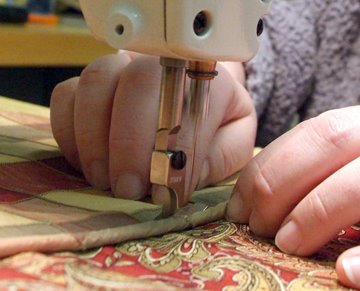
Photo: Olga Adler Interiors
#2: Stove Placement
The stove placement is critical in making your kitchen work with Feng Shui principles.  Ideally, the cook should be in the most commanding position in the kitchen; he or she should be able to see the doorway while preparing meals.  In most homes, this would mean putting the stove at an island in the center of the kitchen, although that is not always possible.  For this reason, islands or prep areas that give the cook a view of the whole room, and allow the cook to converse with family and/or guests while working, are so commonly recommended.  If your stove faces a wall, placing a mirror on the wall above the stove provides a view of the rest of the room, as well as the benefit of the reflected energy.  I can't really see putting a mirror there myself, so if you are with me in that thought, I would consider and recommend tile with a high glaze sheen instead.

#3 Feng Shui Elements
Fire elements, such as the stove and microwave, should be kept separate from water elements, mainly the refrigerator and sink.  When this is not possible, neutralize the fire-water interaction by placing a green element, a plant or green rug, between these conflicting appliances.
Photo: Elle Decor
#4: Color and Light
Color is always an important aspect of Feng Shui design.  Choose colors that encourage heat and prosperity.  Yellows, reds, pinks, and oranges are great kitchen color choices.  If possible, choose a light color, such as white or pale yellow, for your cupboards.  Because they are such a large part of your kitchen, you do not want them to look heavy while hanging overhead.
Use different levels of lighting to create a sense of energy throughout the kitchen.  Do not limit yourself to one bright overhead light.  Use smaller task lights and counter lighting as well.

#5 Accessories and Dinnerware
Mirrors are always a positive element to bring into a room as they reflect and increase the energy and prosperity produced in the kitchen.
Display fresh fruit or small potted herbs to encourage the nourishment and uplifting energy that comes from the kitchen.

Feng Shui can even help you select the dishes in your kitchen.  Round dishes create a harmonious flow of energy, while square dishes slow down your eating.  Blue is good for dieters, while orange and red stimulate the appetite. (Actually on the fence with this one; I may go and intentionally buy some square blue plates!)
Photo: Coastal Living
#6: The "Don'ts"
There are also several Feng Shui "don'ts" to keep in mind.
  • Do not display sharp elements such as knives or scissors.  This creates conflict and anxiety.
  • Do not display large pots and pans overhead.  This creates an overwhelming, heavy feeling for those in the kitchen.
  • Do not live with chaos. As with all rooms, keep the kitchen as clutter free as possible.  Discard of broken appliances and dishes immediately. Keep cabinets and drawers organized.  When possible, keep like items together.
Photo: Sunset Magazine
Using Feng Shui in your kitchen will create a prosperous, energy filled beginning to your day and will bring your family together over meals shared in a kitchen filled with nourishment for both body and soul.

Make Your Entryway Inviting

When you enter a home, the entryway sets the tone for your impression of the entire house.  By enlisting Feng Shui principles, you can make sure your home is a welcoming and positive place to enter for both you and your guests. 

An entryway that is spacious and open is ideal as it creates a space for energy to flow and welcome visitors into your home.  In most new homes, an open entryway is already existing, however, in many older homes the entryway is smaller and closed to the rest of the house.  This does not have to prevent you from creating an entryway that meshes with Feng Shui principles.  Use light colors and mirrors to create the illusion of light and energy bouncing throughout the space.

Photo: House Beautiful

Photo: Olga Adler Interiors
As you walk through the door, make sure there is something interesting to look at it.  Draw the eye into the home.  Avoid walking straight into a wall.  Place a table with an interesting centerpiece in the middle of a large entryway or try an eye-catching light fixture.  If a wall does happen to reside opposite the doorway, try placing a mirror or unique piece of artwork so that visitors are greeted with something to look at, a reason to come inside.

Photo: House Beautiful


Avoid clutter in your entryway at all costs.  This can make residents and visitors feel psychologically blocked the minute they walk into the home.  It prevents the flow of energy into the home and is an unhappy impression both coming and going.  To clear up inavoidable clutter such as coats, hats, and umbrellas, place a coat rack near the door.  This not only avoids these items from being strewn about the rest of the house, but creates a welcoming attitude for guests the minute they walk through the door.  It conveys a message of "come in and stay a while."

Most importantly, make sure your entryway is an expression of items that make you feel good.  Use bright, light colors that you love.  Incorporate favorite pieces of artwork or sculpture.  Make it a place that is all your own and shows your visitors your personality upon first stepping foot in your home.

Photo: Coastal Living

Feng Shui in the Bedroom: A Room to Restore You

Did you wake up rested today? Do you find that your bedroom is the oasis you love to retreat to at the end of the day? The bedroom should be a calming, inviting, restful place to begin and end your day. So if you answered no to either of the questions, then perhaps you may want to consider the following 10 Feng Shui tips to evaluate your space. Hopefully these tips will allow you to create a private sanctuary of positive energy.

1. Place bed in what is referred to as the Command Position, where it provides a clear view of the door so that you are open to receiving the flow of energy.
Brown Davis Interiors, Inc. traditional bedroom
www.houzz.com
Source: Brown Davis Interiors
2.  Bed should be open on both sides and ideally, underneath as well, so the energy is dispersed equally to both partners.
Source: Supernaturalbotanicals.com
3. Having windows behind the bed is not ideal as flow of energy above your head can eliminate the ability for a restful nights sleep. If this can not be avoided, the windows should be covered with window treatments that provide the most closure and protection, such as full drapes and/or natural wood blinds.

www.houzz.com
Source: Patrick J. Baglino Design
www.houzz.com
Source: Revolution Staging


source: SK Designs
4. Be sure bed is not centered directly below beams, knee-walls or overhead fans. Fans are good for circulating energy but having them directly above the chest or head can disrupt rest. A possible fix: crystals can be hung from beams or fans. It is believed this will help to redirect negative energy away from you.
Source: www.houzz.com

5. If your artwork conveys images that are in line with what you want in your life, then you have selected wisely. Let the last images you see before falling to sleep work toward manifesting your dreams. And in the bedroom, things should be paired as much as possible.
Source: Domicile Designs
In Feng Shui, the elephant - as with many cultures - is sacred.  
Elephants displayed in the bedroom support long life, love and faithfulness.

6. Mirrors should not be directly across from the bed. Due to their reflective nature, mirrors multiply energy fields and create irritability and discontent. Mirrors that are in this position should be covered during sleeping hours. If you can place one in an area away from direct view, choose a round mirror as it symbolizes unity.

7. Feng Shui principles instruct that water elements should be minimized in the bedroom as they “put out the fire” to romance. The only time a water element is advised is possibly when there is a fireplace in the bedroom, and then it should be near the fireplace in order counteract the excessive yang energy represented with fire.

8. If your bedroom contains a file cabinet and office desk you are definitely ready for a Feng Shui evaluation and redesign! If they must be in the bedroom space, then work to minimize their presence with a divider, curtain or cabinet. Keep the room focused on rest, dreams and romance.
source: New York Social Diaries 

9. Use a dimmer switch on the lighting in your bedroom. While you want to make sure that your bedside lighting for reading is adequate, you also want to make sure there is the option to have very low, ambient light.

source: www.supernaturalbotanicals.com

10. Use colors that are soothing and peaceful. Blues, calming pastels, and neutrals coincide with calm and relaxation. Bold colors are effective for careful balance of yin and yang energies.
Romantic bedroom traditional bedroom
source: Kate Byer Interior Design
The placement and inclusion of objects and things that surround you can work to either hinder or promote positive energy. If you are surrounded by the wrong things, if there is conflict present or if your surroundings are full of clutter, you are presenting barriers for positive energy.

Make a point to satisfy the senses in your bedroom design. Add luxurious, sensuous and/or natural fabrics (touch), natural oils or aromatherapy (smell), soft music, white noise or sounds of nature (sound), flowers and art (sight)… and think wine and/or chocolate….(taste)

I hope that these tips will help you to create a bedroom you long to spend more time in!

For my local friends and readers, Westford MA Feng Shui Expert, Natalia Kaylin is available for individual consultations and teaches regularly throughout Central Mass.  Natalia can be reached at www.easternsciences.com

I also highly recommend www.thespiritualfengshui.com

Go Green with Fabrics!

Source: Google Image Search


Are you “going green”? Many of you will be happy to know that more and more of our fabric vendors are offering fabrics following the environmentally friendly trend. Eco-friendly options include fabrics that are made of sustainable materials, finished without chemicals and most coming to us from fair trade countries.
Helping out the environment is a new way people are helping out the world, one throw pillow at a time. Just as recycling our trash, and turning off the water and lights when not using them recycling materials can pay off in the long run; being kinder to our environment and prolonging the life or our planet! It may not be for everyone but it sure will feel good to help out our mother earth!
Many of our high end fabric makers, — Kravet, Robert Allen, Duralee and Schumacher – continue to expand on their eco-friendly offerings. At this time,
prices for eco friendly products continue to be higher than the other fabrics, however, as this market grows we can expect that in the future these prices will become more reasonable - providing the opportunity to reach out to an even wider market.

  • The Kravet Green Collection is made of 100% recycled polyester.
  • The recycled polyester is a unique blend of post-industrial and post-consumer fibers.

  • The fabrics are woven and treated with no additional chemicals.

  • During the finishing process, water based products and environmentally approved dyes are used.

  • After years of enjoyable use, these fabrics are recyclable.

SAMPLES:


Duralee- Eco-Fabrics by DuraleeContract®
Eco-Fabrics by DuraleeContract features the unique styling expected of all DuraleeContract fabrics with content that passes MBDC (McDonough Braungart Design Chemistry)'s Gold standard for environmentally friendly products. To achieve the Gold level, MBDC needed to go through the certification which required the evaluation of the mills' facilities within the five categories which included, Materials, Nutrient (Re) utilization, Energy, Water and Social Responsibility.
  • Most polyester is manufactured using a catalyst called antimony trioxide, which is a possible human carcinogen. Eco Intelligent Polyester, however, is made from a fully optimized fiber using a new, environmentally safe catalyst.

  • Designed with optimized dyestuffs and chemicals, which replace harmful chemicals and hazardous heavy metals.

  • Designed to be safely recycled into new fabric at the end of its commercial life, with no hazardous by-products.

  • Made with sustainable manufacturing processes, allowing limitless design and color.

  • Eco Intelligent® Polyester is a synthetic textile designed for sustainability from start to finish.

SAMPLES:


R0bert Allen
The Robert Allen Group recognizes the importance of protecting the environment and providing sustainable products that range from waste reduction to energy efficiency.
The fabric that they designate as “eco-friendly” has met a criteria they've made based on strict environmental standards for fabric content, dye or pigment composition and also the finishing processes and treatments.

FABRIC CONTENT:
  • At least fifty percent of the fibers in their eco-friendly fabrics are sustainable, organic and/or recycled.
  • Sustainable fibers come from rapidly renewable resources with growth and harvest cycles of five years or less. Fibers that fall into this category include alpaca, bamboo, mohair, hemp, wool, and cork.
  • Organic fibers are grown without the use of pesticides, fungicides, herbicides and chemical fertilizers. Fibers that fall into this category include organic cotton, organic hemp and organic linen.
  • All of their organic fabrics are made from certified organic fibers.

  • Recycled fibers come from post-consumer waste such as soda bottles.

  • They also come from post-industrial waste: byproducts from the manufacturing process. Their post-industrial recycled fibers come from petroleum byproducts, recycled cotton, corn derivatives (PLA), recycled silk, and soybean husks.


COLOR:

  • The eco-friendly fabrics may derive color from metal-free or reduced metal dyestuffs and pigments.
  • If the fabrics contain dyes or pigments, they meet the metal content standards set by the Ecological and Toxicological Association of Dyes and Organic Pigments Manufacturers (ETAD).
FINISHING:
  • Their eco-friendly fabrics may be loom state, meaning that they come straight from the loom with no additional performance preparations.

  • Eco-friendly fabrics with finishing treatments may include washing (with water alone or with a mild soap), aero-ing (tumbling), steaming and/or pressing with hot rollers.

  • It is their preference not to use a stain repellent or a water repellent except in cases where they are a practical necessity and in these cases, they will offer the most environmentally-friendly option available

  • Backings applied for Contract applications are polyester and in combination with a 100% recycled polyester fabric, the end product is completely recyclable.

SAMPLES:


For more "going green" ideas try these sites: Inhabitat and Treehugger or GreenDesignGirl

Visit Storibook Designs on Twitter or Facebook for more of our posts!

Related Posts with Thumbnails

Craftsmanship: custom artistry by hand

Craftsmanship: custom artistry by hand
At Storibook Designs we create custom designs by hand; here it is not just sewing, it is art!